
Safety, Security & Compliance
Designed In. Not Added On.
At Energy Compute Campus, safety, physical security, and compliance are not programs applied to a finished design. They are embedded into every phase of development and every element of ongoing operations.
4
Core Safety Disciplines
EHS, PTW/LOTO, PSM, Emergency
2
Security Domains
Physical and OT/IT cybersecurity
Day 1
Program Activation
Before first energization
Auditable
Evidence Standard
Records retained and accessible
Our Safety Philosophy
“Program maturity, not just program existence. Evidence, not just assurance.”
We measure safety performance, investigate incidents, audit compliance, and track corrective actions — not because we are required to, but because it is how credible, high-trust infrastructure operations work.
Safety is part of the GridCore framework, not an ECC add-on. For tenants, these programs surface through GridColo-standard access, escort, work authorization, visitor management, incident communication, and compliance documentation workflows.
Safety Programs
Four Core Safety Disciplines
Each program has defined ownership, documented procedures, competency requirements, and evidence standards.
EHS Program
A comprehensive Environmental, Health, and Safety program governs all campus activities — from construction through steady-state operations.
- Site-wide safety policy and accountability structure
- Job Hazard Analysis (JHA) for all non-routine tasks
- Personal protective equipment requirements by zone
- Incident reporting, investigation, and root-cause analysis
- Safety culture monitoring and behavioral safety observation
- Environmental monitoring and reporting obligations
Permit-to-Work and Hazardous Energy Control
Formal PTW and LOTO systems control all work on energized or hazardous equipment. No work proceeds without verified isolation and authorized permit.
- Permit-to-Work (PTW) system covering all hazardous work categories
- Lockout/Tagout (LOTO) program compliant with OSHA 29 CFR 1910.147
- Isolation verification and multi-point energy control
- Permit issuers trained and competency-assessed
- PTW compliance audits and near-miss tracking
- Electronic or paper PTW system with audit trail
Emergency Response and Crisis Readiness
Emergency response plans are developed before they are needed, tested regularly, and integrated with local first-responder agencies.
- Site Emergency Response Plan (SERP) covering all credible scenarios
- Fire, explosion, fuel release, power failure, and security event protocols
- Formal interfaces with local fire, EMS, and law enforcement
- Emergency response drills and tabletop exercises
- Emergency operations center and communications protocols
- Crisis management escalation to executive team
Process Safety and Environmental Compliance
Process safety management (PSM) disciplines apply to the generation facility. Environmental permits are maintained proactively, not reactively.
- Process Hazard Analysis (PHA) for generation systems
- Management of Change (MOC) for process modifications
- Pre-Startup Safety Review (PSSR) for new systems
- Air quality permit compliance and emissions monitoring
- Spill prevention and containment (SPCC) program
- Environmental permit calendar and compliance tracking
Security Programs
Physical Security and Cybersecurity — Integrated
Security is not a perimeter fence and an IT firewall. It is a layered, governed program covering physical access, OT system integrity, and incident response.
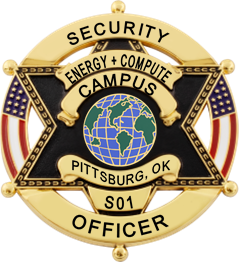
ECC Security Officer
Physical Security
Layered physical security from outer site perimeter through each compute building interior, with zone-based access controls and 24/7 monitoring.
- Outer site perimeter fencing and controlled entry points
- Zone-based access credentialing (outer, inner, critical)
- CCTV coverage across all zones with retention
- Intrusion detection and alarm response
- Visitor management — badging, escort, and log
- After-hours security staffing and patrol
OT/IT Cybersecurity Governance
Operational technology (OT) and information technology (IT) security are governed under a unified framework, with explicit OT/IT network segmentation and controls.
- OT/IT network segmentation and DMZ architecture
- Industrial control system (ICS/SCADA) hardening standards
- Access control for OT systems — role-based, least-privilege
- Change management for OT configuration and software
- Cybersecurity incident response plan
- Periodic security assessments and vulnerability management
Security Details Are Controlled
This public page describes program structure and maturity. Detailed security procedures, access control configurations, and system architecture are disclosed only through appropriate confidentiality agreements.
Governance and Evidence
Audits, Records, and Corrective Action
Compliance is not self-declared. It is documented, audited, and demonstrated through evidence that survives diligence reviews.
Internal Audits
Regular internal safety and compliance audits conducted by EHS function, covering PTW compliance, LOTO verification, permit calendar, and procedure adherence.
Third-Party Assessments
Periodic independent assessments of safety programs, physical security posture, and OT cybersecurity configuration against applicable standards.
Corrective Action Tracking
All audit findings, incidents, near-misses, and inspection results generate formal corrective actions with owners, deadlines, and verification sign-off.
Readiness Reviews
Structured operational readiness reviews at key milestones — before first energization, before each load step, before planned outage return to service.
Safety Framework Overview
Policy Level
- Safety policy and leadership commitment
- Accountability structure
- KPI and performance targets
Program Level
- EHS, PTW/LOTO, PSM, Emergency Response
- Physical Security, OT/IT Cybersecurity
- Environmental Compliance
Procedure Level
- Task-specific work procedures
- Emergency response procedures
- Security operating procedures
Evidence Level
- Permits, records, inspection logs
- Audit reports and findings
- Training records and competency assessments
Built for Diligence
Safety, security, and compliance programs are structured to support tenant diligence, lender diligence, insurer review, regulatory review, and long-term operating accountability.
The standard is evidence, not assurance. Programs are designed to support diligence readiness, audit-ready documentation, and long-term program maturity — not just program existence.
Safety and security readiness you can review and rely on
Request a program overview or discuss how our safety posture supports your operational requirements.